Knowing when not to send a press release is as crucial as recognizing the opportune moments to do so. As a communications professional, you understand that the power of a press release lies not just in its distribution but in its timing and relevance. Sending a release without strategic consideration can dilute your message and even damage your credibility.
This article explores the critical factors to evaluate before pressing “send,” ensuring that your communications remain impactful and respected within the ever-evolving media landscape.
The Best Time To Send a Press Release
Timing Matters
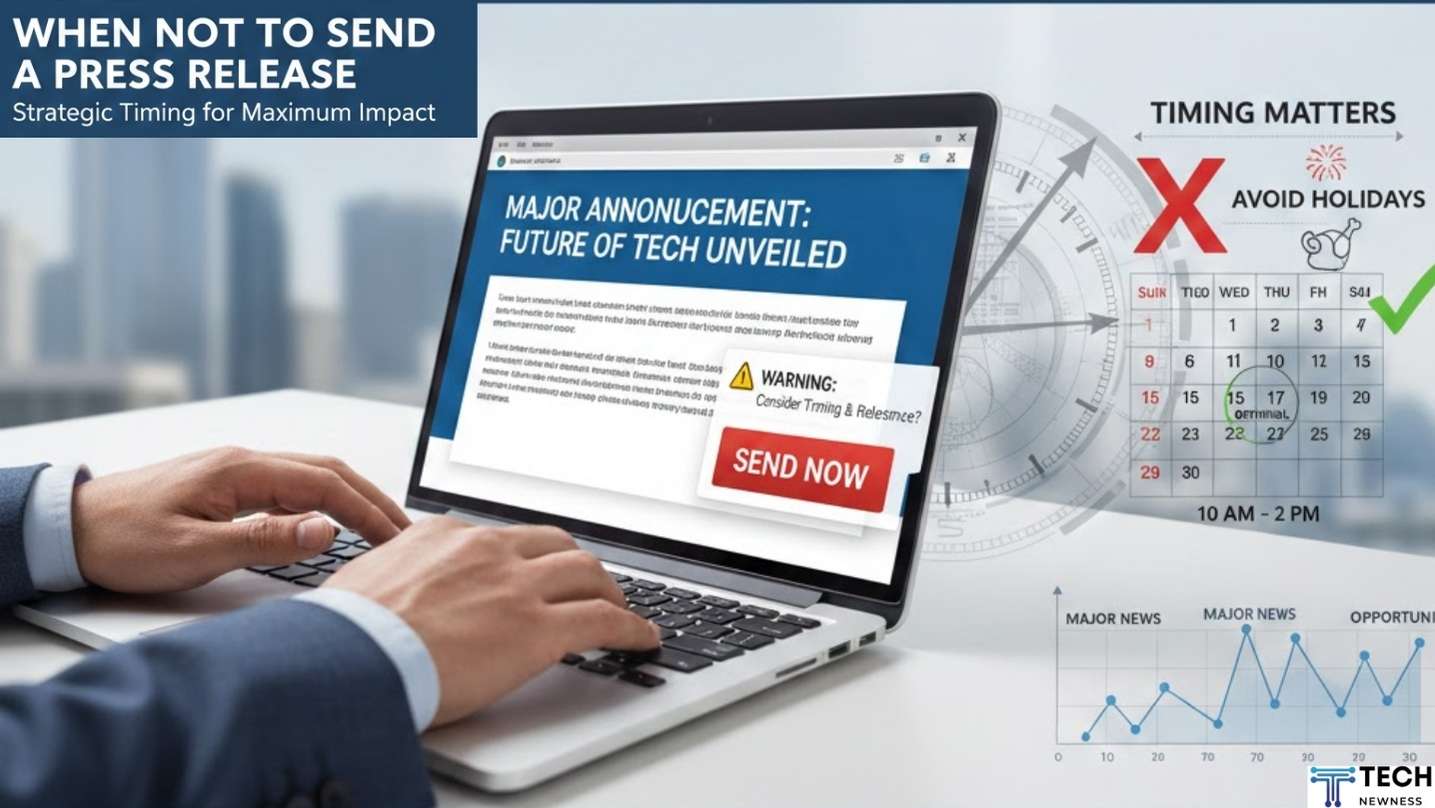
Choosing the right moment to distribute a press release is crucial for capturing attention. The key is not just understanding when to send a press release, but recognizing when it might be best to hold off. Weekdays are generally optimal, specifically during regular business hours. Avoid weekends and holidays when content is likely to be overlooked due to diminished media presence.
Align with News Cycles
Synchronizing your release with relevant news events can enhance its impact. Timing your release to complement a larger narrative or ongoing dialogue in the media can significantly increase its reach and engagement. However, make sure your announcement doesn’t get lost during major headlines unless it’s related.
When Should You Rethink Press Release Timing?
Avoiding Major News Clashes
To ensure your press release captures the necessary attention, it is advisable to steer clear of periods saturated with significant news events. Releasing information during high-traffic news times like quarterly earnings reports or major industry conferences can cause your announcement to get lost amid the noise. Instead, opt for times when your message can stand out, such as less crowded news days. Carefully choosing when not to send a press release ensures it isn’t overshadowed by overwhelming news cycles.
Being Wary of Busy Holidays
Timing plays a critical role in the success of a press release. Avoid scheduling your release around major holidays like Thanksgiving or the end-of-year festivities. Journalists are often inundated with stories during these times, which can decrease the visibility of your announcement. Instead, plan for a period when the news cycle is less congested to allow your release room to breathe. Understanding when not to send a press release will enhance its effectiveness and impact.
When Should a Press Release Be Sent Out?
Ideal Days for Distribution
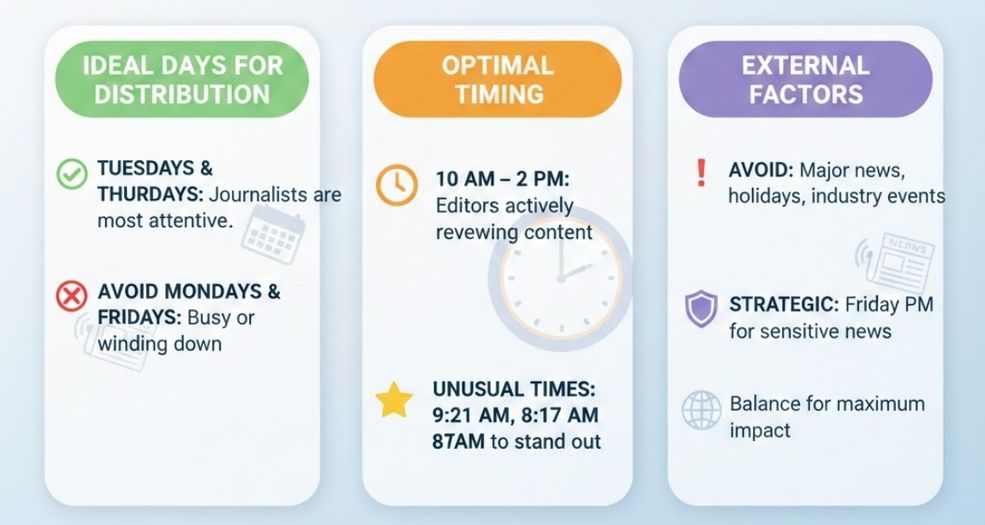
Choosing the right day to send a press release can significantly impact its success. Experts often recommend distributing releases on Tuesdays and Thursdays, as these days align with when journalists are typically caught up on their tasks and most attentive to new content. In contrast, avoid Mondays and Fridays, as journalists may be busy catching up from the weekend or winding down for it. Sending a release during these optimal days can increase the likelihood of it being noticed and acted upon promptly.
Optimal Timing
Timing is crucial when deciding to send a press release. Aim for a window between 10 AM and 2 PM, when editors and journalists are actively reviewing new content and responding to emails. Avoid traditional scheduling times, such as on the hour, to make your release stand out—consider unusual times like 9:21 AM or 8:17 AM. Sending at the optimal time ensures your message reaches its audience efficiently, without getting lost in a sea of competing information.
Consider External Factors
Beyond selecting the best day and time, be mindful of external events that could impact your press release’s effectiveness. Major news events, holidays, or industry-specific happenings can overshadow your message. If your news is sensitive or could wait, consider a strategic time like Friday afternoon to avoid immediate scrutiny over the weekend and allow it to gain traction gradually. Balancing these considerations can maximize your press release’s potential reach and impact.
Is It Okay to Send a Press Release on a Friday?
Timing Considerations
Sending a press release on a Friday can indeed be tricky. Many journalists are winding down their week, preoccupied with other tasks. As data from Xenophon Strategies suggests, only 2% of media professionals prefer pitches on Fridays. Consequently, important announcements may get overlooked in the weekend shuffle.
Strategic Approaches
Despite the challenges, a Friday morning release might be an option if your news is exceptionally significant or time-sensitive. It’s critical to weigh your options and determine if immediate attention is necessary or if waiting until a more favorable time is beneficial.
What Are the Disadvantages of a Press Release?
Cost Considerations
The financial implications of distributing a press release can be quite significant. Using a press release distribution service may cost thousands of dollars per post. This could be a burden for smaller to mid-size companies. Consider if these resources might be better invested in personalized media outreach.
Limited Impact and Engagement
Press releases often fall short of generating genuine interest. Their one-way communication nature does not allow for the interactive engagement of sophisticated marketing tools. They may garner exposure but lack the impact of a journalist’s objective news article.
Measurable Returns
Evaluating the return on investment for press releases can be difficult. While potentially less expensive than advertising, the overall costs, including both resource and time investments, must be justified by tangible outcomes. The likelihood of these releases successfully drawing meaningful visibility or coverage remains uncertain given the competitive distribution landscape.
What Are Five Rules When Writing a Press Release?
Craft a Strong Headline
A clear, engaging headline is crucial. It should concisely convey the main message and grab the reader’s attention immediately. Headlines are often the first impression and play a pivotal role in whether editors or journalists decide to pursue your story.
Prioritize the 5 W’s
The body of your press release must answer the five W’s: who, what, when, where, and why. This ensures the reader has all the essential details, fulfilling the core purpose of the press release.
Develop a Compelling Narrative
Before drafting, ensure your press release builds on a strong story. Collaborating with your team to brainstorm ideas can help shape a compelling narrative, which is crucial to maintain interest and engagement with the audience.
Incorporate Quotes and Data
Embedding memorable quotes from spokespersons adds a personal touch and credibility, while relevant data or statistics support the significance of your announcement. This combination strengthens your narrative by adding authority and human elements.
End with a Call to Action
A clear call to action invites the reader to take the next step, whether it’s visiting a website, contacting the company, or attending an event. This helps drive the desired response and extends interaction beyond the press release’s content.
When Not to Send a Press Release?
Are Routine Updates Worth a Press Release?
Common situations when not to send a press release include minor updates or routine information that lack widespread newsworthiness. Instead, these may be better communicated through targeted press statements or direct outreach to key media contacts.
Crisis Response
In times of crisis or negative scenarios, a press release might not be the most effective tool. Utilize a more focused method, such as a media alert, to ensure precise and controlled messaging that reaches the appropriate audience swiftly.
Content Non-Aligning with News Criteria
Determining when not to send a press release also involves assessing the content’s newsworthiness, which is pivotal. Avoid issuing press releases on matters unlikely to attract media attention, as these may fail to achieve any engagement or coverage.
Conclusion
Understanding when not to send a press release positions your organization for greater success and credibility. By discerning the importance of timing, relevance, and audience interest, you can avoid the pitfalls of over-communication and maintain the integrity of your brand. Instead of defaulting to press releases for every piece of news, utilize alternative communication strategies tailored to the specific needs of your audience.
This approach not only conserves resources but also strengthens your message’s impact when it truly counts. Ultimately, a strategic, thoughtful approach to press releases enhances your organization’s reputation and fosters more meaningful engagements.
See Also: Elon Musk Bought Google: But Did The Deal Really Happen?