
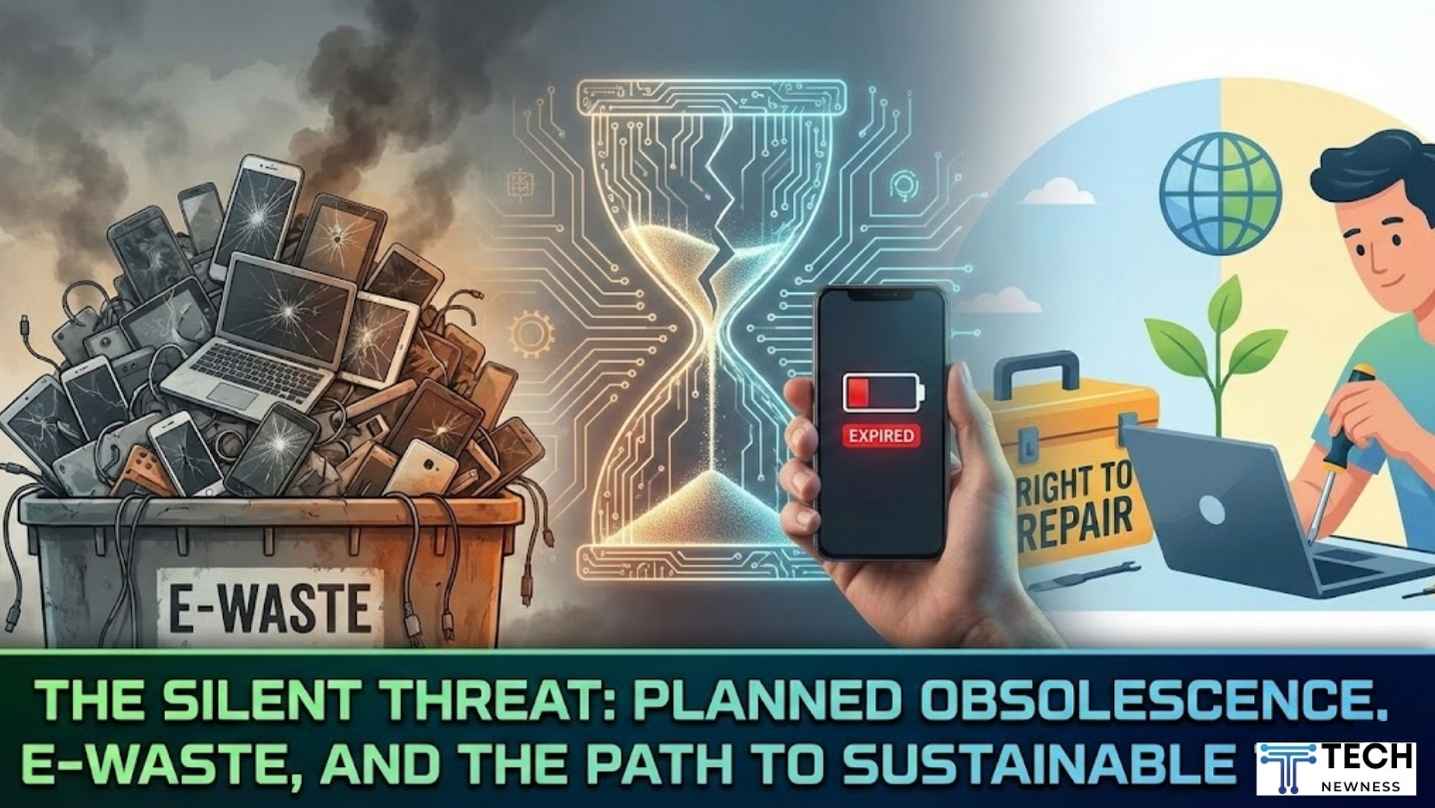
The concept of planned obsolescence lurks as a silent yet pervasive threat to environmental sustainability. Consumer electronics, designed with intentionally limited lifespans, contribute significantly to the burgeoning crisis of electronic waste.
This article delves into the murky waters of industry practices that prioritize profit over planet, unveiling the hidden costs of such strategies. By examining consumer behavior, the right-to-repair movement, and sustainable design innovations, it offers a roadmap for reducing e-waste. It calls upon tech companies to embrace corporate responsibility, urging a shift towards more sustainable approaches in an industry ripe for change.
Table of Contents
What Is Planned Obsolescence?
Defining Planned Obsolescence
Planned obsolescence is a strategic concept where manufacturers design products with a limited lifespan, prompting consumers to replace them more frequently. By deliberately using suboptimal materials or imposing technical limitations, companies encourage continual purchasing cycles. This practice can manifest as either obsolescence of desirability—where style changes make products appear outdated—or obsolescence of function—where technical deficiencies in product design limit longevity.
Types and Impacts
The technology sector is particularly notorious, with systemic obsolescence creating compatibility issues and perceived obsolescence leveraging style changes to influence buying decisions. Such tactics result in significant e-waste, damaging the environment and hastening resource depletion. In 2022, over 62 million tonnes of e-waste were generated globally, underscoring the environmental impact of this practice.
The History and Variants of Planned Obsolescence
Origins and Evolution
Planned obsolescence dates back to the early 20th century when manufacturers aimed to boost consumer consumption by shortening product lifespans. The concept was famously introduced by Bernard London in 1932 as a means to stimulate the economy during the Great Depression. Over time, this strategy evolved, becoming a cornerstone of consumer electronics design.
Different Approaches
There are several variants of planned obsolescence. Techniques include:
- Design Obsolescence: Products are designed to appear outdated or unfashionable.
- Functional Obsolescence: Items lose functionality over time or with software updates.
- Systematic Obsolescence: Warranty periods are shorter than the product lifespan, discouraging repairs.
Impact on the Circular Economy
Such practices increase e-waste and disrupt the progression towards a circular economy. As consumer demand grows alongside environmental awareness, recognizing these tactics becomes crucial in choosing sustainable technology. Emphasizing the right-to-repair movement can foster corporate responsibility and more ethical production methods.
How Planned Obsolescence Contributes to E-Waste
The Escalation of Electronic Waste
Planned obsolescence significantly accelerates the creation of electronic waste, transforming it into one of the fastest-growing waste streams globally. By deliberately designing products with shorter lifespans or restricting their repair capabilities, manufacturers encourage frequent replacements, leading to mounting quantities of discarded electronics. Electronic devices contain toxic materials, which, when improperly disposed of, can harm ecosystems and human health. E-waste is predicted to reach 62 million tonnes per year in the European Union alone, exacerbating environmental challenges such as resource depletion and greenhouse gas emissions.
Economic Impacts and Consumer Behavior
Economically, planned obsolescence burdens consumers with the financial strain of replacing electronics prematurely. This cost is further amplified by unsustainable practices that emphasize rapid trend changes, pushing individuals to desire the latest products despite functional alternatives. Fostering practices that prioritize repair, reuse, and recycling over constant turnover is essential for combating waste.
Promising Solutions for E-Waste Reduction
The solution lies in sustainable technology, which encompasses the development of longer-lasting and repairable products. The Right to Repair movement advocates for consumer access to repair options, pushing against the tide of planned obsolescence. Legislative measures like the circular economy model promote product longevity, decreasing waste and enhancing resource conservation. Embracing these sustainable practices is pivotal for mitigating the adverse effects of planned obsolescence on environmental integrity.
Industry-Specific Approaches to Planned Obsolescence: The Case of Apple
Apple’s Approach to Product Design
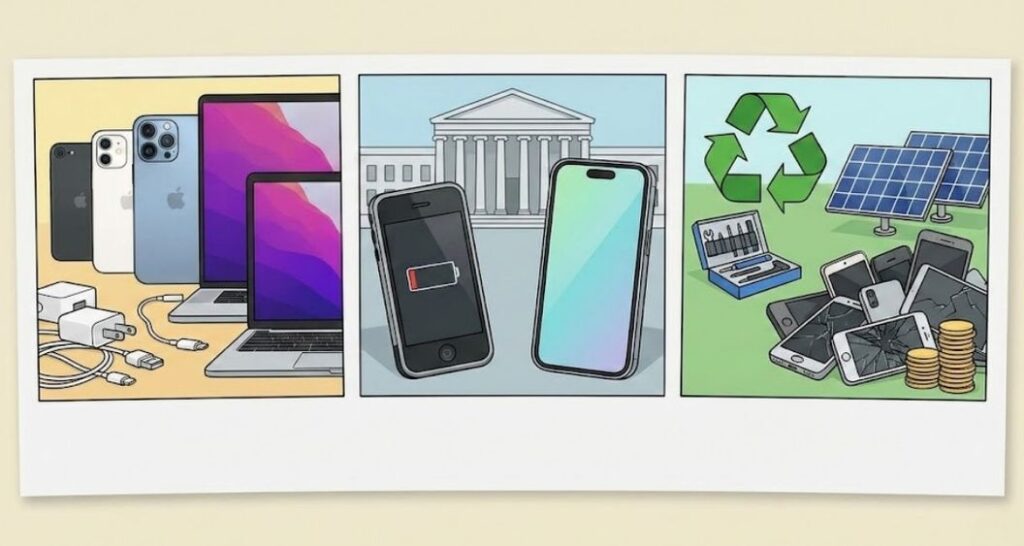
Apple has long been scrutinized for its alleged practice of planned obsolescence in the consumer electronics market. The company tends to introduce incremental updates in new iPhone models, encouraging consumers to upgrade more frequently due to slight enhancements. For instance, the habitual changes in MacBook Pro interfaces often render previous accessories obsolete, fostering increased electronic waste.
Software Updates Influence
Apple restricts software updates for older devices, causing performance degradation and perceived obsolescence. In 2018, the Italian Competition Authority fined Apple €5 million for software practices that reduced device performance. Apple acknowledged some updates affected battery life but denied intentional obsolescence efforts.
Sustainability Efforts and Criticism
Despite criticism, Apple invests in sustainability, with efforts like powering facilities with renewable energy and promoting recycling. They launched a self-service repair program, yet critics claim these efforts don’t fully address planned obsolescence concerns. Critics argue Apple’s focus on profitability challenges its commitment to sustainable technology and the circular economy based on their broader practices. The case presents a call for industry-wide shifts towards repairability and environmental responsibility.
The Right-to-Repair Movement and Sustainable Technology Design
Reclaiming Control Through Repair
The Right-to-Repair movement is a pivotal force in challenging the planned obsolescence ethos pervasive in the tech industry. By empowering consumers and independent shops with the ability to access parts and repair manuals, this movement promotes the idea that products should not just be discarded at the first sign of wear. This shift is crucial for reducing e-waste, which reached a staggering 62 million metric tons in 2022 alone, largely due to technological disposability.
Towards a Circular Economy
By embracing modular and durable designs, companies can support a circular economy that minimizes waste and conserves resources. The legislation supporting Right to Repair, such as the EU’s latest directives, encourages manufacturers to design more repairable and sustainable technology. These efforts not only advocate for consumer empowerment but also tie into broader corporate responsibilities.
Corporate Responsibility and Innovation
Major tech players like Google have shown support for repair initiatives, potentially signaling a shift towards more responsible practices. This move is a step towards balancing innovation with sustainability, aligning business goals with right-to-repair principles for a more livable future.
Corporate Responsibility and the Circular Economy in the Tech Industry
Embracing Circular Design Principles
In an era dominated by the rapid turnover of electronic devices, the tech industry bears significant responsibility in mitigating e-waste. Corporate responsibility becomes paramount in steering away from the linear economy towards a more sustainable circular economy. Companies like Cisco lead the charge by incorporating Circular Design Principles into their offerings. By designing products for durability, repairability, and recyclability, they aim to eliminate waste and regenerate natural systems, ensuring materials remain in circulation through programs such as Cisco’s Product Takeback and Reuse.
Collaborative Efforts and Innovations
Transitioning to a circular economy is not a solo endeavor. It necessitates collaboration across value chains, from consumers to policy makers. The introduction of platforms for shared use, such as Fairphone’s modular smartphones, exemplifies how tech companies can innovate within this framework to curb short-termism and embrace long-lasting designs. Furthermore, integrating IoT solutions allows companies to optimize resource usage and automate sustainable practices, offering additional pathways to reduce their environmental footprint.
Is Planned Obsolescence Legal in the US?
Understanding the Legality
Planned obsolescence, the intentional crafting of products with a limited lifespan, is not illegal at the federal level in the United States. While the practice raises ethical concerns, proving deliberate design choices that shorten product life is often complex, leading to limited legislative action. Some view it as a byproduct of competitive market forces that drive continuous technological advancement and innovation.
State-Level Interventions
However, several states have championed right-to-repair laws to mitigate the effects of planned obsolescence. States like California, Minnesota, New York, and Colorado have enacted measures requiring manufacturers to facilitate repairs by providing access to manuals and spare parts, thus promoting product longevity. These efforts aim to empower consumers and combat e-waste by encouraging sustainable technology use.
Ongoing Debates and Solutions
The legality of planned obsolescence remains a contentious issue. Environmental advocates argue for broader legislation that could include durable design expectations and mandatory repair disclosures, aiming towards a more sustainable, circular economy. Meanwhile, consumer awareness and advocacy continue to play crucial roles in shaping future regulations.
What Countries Have Banned Planned Obsolescence?
Several countries have taken significant legal steps to combat planned obsolescence, setting precedents for a more sustainable technological landscape.
France and Its Landmark Legislation
In 2015, France became a pioneer by criminalizing the deliberate reduction of product lifespan. Under this legislation, manufacturers are mandated to inform consumers about the expected lifespan of products and ensure the availability of spare parts for at least a decade. This move has not only spurred investigations, such as allegations against Apple for slowing older iPhones, but has also set a high standard for corporate responsibility in technology.
Broader European Efforts
Following France, other European nations like Norway, the Netherlands, and Italy have enacted similar laws from 2018 to 2020. These regulations focus on enhancing product durability and facilitating repairs. The European Union joined this initiative in 2020, underscoring the importance of sustainable technology across its member states. These collective efforts align with the broader themes of the right-to-repair movement and the circular economy.
Conclusion
In the face of planned obsolescence, the path forward demands both collective action and individual responsibility. As manufacturers shape products with fleeting lifespans, the environmental burden grows heavier, underscoring the urgency for change. By embracing the right-to-repair movement and advocating for sustainable design, consumers can challenge the status quo and drive the tech industry toward more responsible practices. Corporate commitment to longevity and repairability, alongside informed consumer choices, can significantly reduce e-waste and resource consumption. The fight for a sustainable future in consumer electronics is not just a possibility—it is an imperative that must be met with determination and innovation.
See Also: DentalX AI Company in the United States – Transforming Dentistry with Artificial Intelligence